United for Change

Our News

HEALTH

KORA BORA's Health programmes

14 April 2016

HEALTH

The International Diabetes Federation warns that 37 million people are living with the disease in the Middle East and North Africa region. This accounts for around 9.7 per cent of the population; furthermore, close to 50 per cent of cases in the region remain undiagnosed. The IDF expects the number of cases in the Middle East to nearly double over the next two decades.

All of which means that if a healthy nation is a happy nation, then happiness will be well earned in the Gulf in the coming years. Obesity and diabetes rates in the region are soaring and last year four of the six Gulf nations were named among the top 10 countries globally for the highest rise in overweight and obese people under the age of 20. Westernised food laden with salt and sugar, and the sedentary lifestyle of many sections of the population, are blamed.

The response of Gulf governments has so far been encouraging, as they look to mobilise their populations and promote sport and exercise as activities that will likely save hundreds of thousands of lives in the future. They are starting to educate their citizenry as to the innumerable benefits of healthy eating and an active lifestyle, and they are engaging with the private sector to bring global best practice to the region.

Much work remains to be done, however: it takes years, not months, to change a contemporary culture of fast and fatty foods, and a lifestyle of late nights and no exercise. Yet if Gulf governments drive forward with innovative and ambitious programmes dedicated to preventative healthcare, then this will play a huge role in curbing the costly treatment of chronic diseases in the future. As ever with health and fitness, the effort will be well worth the reward.

0 Shares

EDUCATION

KORA BORA's education programmes

14 April 2016

EDUCATION

Education is the single most powerful driver of economic, social and cultural growth. It is a key priority of governments worldwide, a focus for investment and innovation and the subject of incremental reform as well as sweeping change.

In the Gulf in particular, where more than half of the population is under 25 years of age, leaders have recognised that education holds the key to stability and prosperity for this and for future generations.

As a consequence, the shape of teaching and learning in the region is changing. Education reform is a complex and delicate task: education authorities must develop organisational capacity, harness technology to support learning, engage with the private sector through public-private partnerships, and improve services while reducing costs.

Moreover, education authorities must be prepared to explore new pathways of learning that go beyond the classroom and the chalk-board: life skills addressing cognitive, emotional, interpersonal and social abilities, for example, will imbue the young with a broader palette of essential skills with which to navigate an increasingly globalised and interconnected world.

The extent to which Gulf governments are able to achieve effective and lasting education reform will do much to determine the futures of their peoples, and the region. And if the vision of today’s leaders becomes reality, then those to come will be equipped with the tools for even greater success.

0 Shares

Makani Centers

Giving Jordan’s Syrian refugees a second chance at education and social skills

26 February 2016

Makani Centers

When lives, homes and families are torn apart by war, education is often the unconsidered casualty - the importance of an ‘A’ grade or passed spelling test replaced by the need to simply survive.

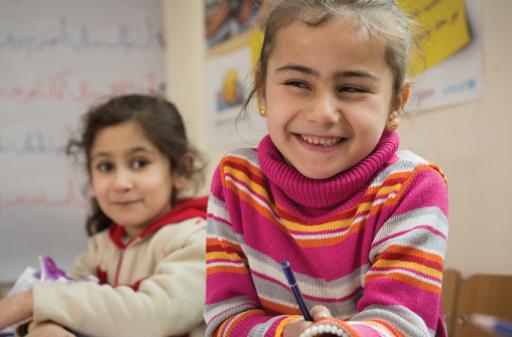
Already in the Middle East, the fear is for a ‘lost generation’ of children, blighted and disenfranchised by conflict, lacking education and social skills and unable to receive the support they desperately require in these areas.

In Jordan, the government has provided access to schools for Syrian children, yet pressure from parents to begin working, the logistics and safety of transportation to and from public schools and limited classroom capacity have all been key contributors to the fact that out of 220,000 school-aged refugees in Jordan, only 130,000 are enrolled in the public school system.

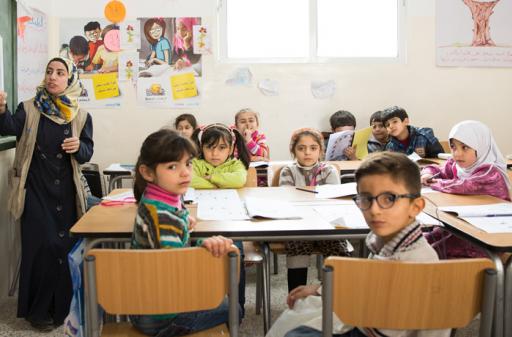
In response, UNICEF and Save The Children Jordan’s Makani – meaning ‘my [safe] space’ – centers have been designed to provide the remaining 90,000 children with much-needed alternative education, psychosocial support and life skills under one roof.


Enlisting the support of both government and non-governmental partners, classes include informal education in STEM (science, technology, engineering and mathematics) subjects, art and drama. Life-skills sessions also target adolescents entering their formative years and in need of support.

By building their self-confidence, social skills, identity and creative thinking, young people can be empowered to take charge of their own lives and play their own role in constructive social change.

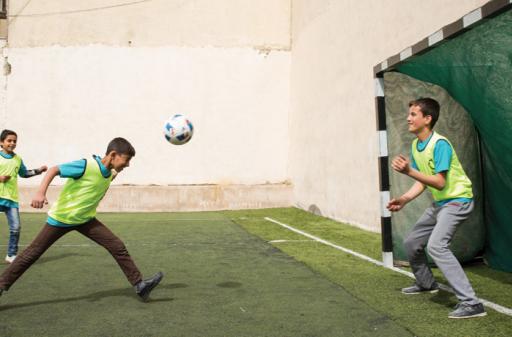
Within Makani Centers, KORA BORA’s football-oriented life skills programmes have already proved their worth during pilot phases in March 2016.

Taught by our dedicated and trained coaches, our programmes provide valuable experiences in self-management, social interaction and team bonding. By providing children with the opportunity to ‘learn through play’, even those who have been deeply affected by the violence and disruption have a chance to rebuild and grow into well-rounded members of society.

0 Shares

KORA BORA ANNOUNCES MENA LAUNCH

Football not-for-profit already benefitting refugees in Jordan

10 February 2016

KORA BORA ANNOUNCES MENA LAUNCH

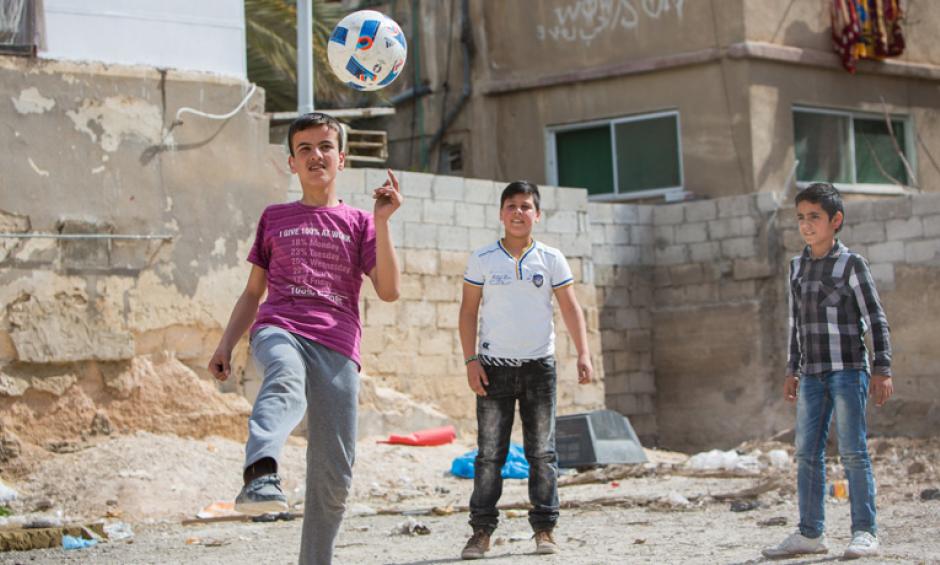
KORA BORA, a not-for-profit, non-governmental organisation, today announced the official launch of its initiative within the MENA region. The KORA BORA initiative seeks to improve the daily lives of underprivileged children through the unifying theme of football.

The vision of founder and CEO Abdul Razaq Buhijji, KORA BORA develops and funds programmes that help provide children and young people with education, access to nutritious food and a safe environment in which to live.

These programmes are designed to support and strengthen existing initiatives and charities in the fields of education, health and environmental awareness, with pilot programmes already successfully providing support to charities including Save The Children Jordan and UNICEF.

KORA BORA uses the unique, global power of football to transcend social barriers, unite cultures and raise awareness. Buhijji explains the significance of football to the initiative:

“Wherever you go in the world, you will find people playing football – from league matches in professional stadiums to barefoot games in dusty car parks. Football is a ‘universal language’, with a unique history of winning hearts and minds the world over. It offers us a fundamental commonality that enables KORA BORA to transcend cultural differences, unite audiences and put the passion and celebration of football at its core.”

Football not only provides a central theme for KORA BORA – it also defines the physical activities used within the initiative’s programmes:

The Education Programme

Taught by dedicated and trained coaches, the KORA BORA Education programme provides children and young people with valuable experiences in self-management, social interaction and team bonding. By ‘learning through play’, even those who have been deeply affected by the violence and disruption that conflict has had on their lives have a chance to evolve their cognitive, emotional, interpersonal and social skills in order to rebuild and grow into well-rounded members of society.

In partnership with Save The Children Jordan and UNICEF’s Makani (My Space) initiative, a pilot KORA BORA curriculum is currently underway.

The KORA BORA Education programme has been developed in partnership with Ripple - a learning organisation established in 2012, providing training and facilitation services using modern-day interactive learning methods.

The Health Programme

Currently under development, a Health programme focused on food nutrition will begin pilot testing in the third quarter of 2016.

The Environment Programme

The first stages of the KORA BORA environment programme began in the first quarter of 2016, supporting a UNICEF click-funding campaign, which is executed by Rotary District 2451, to provide safe water to poor households in deprived areas in Egypt.

“We wish to follow the example set by His Highness Sheikh Sabah Al-Ahmed Al-Sabah, Amir of Kuwait in demonstrating to the world Kuwait’s prominence as a nation of thoughtful giving” explains Buhijji.

KORA BORA is a not-for-profit, non-governmental organisation registered in Kuwait and Egypt, with offices in Jordan and the UAE. The KORA BORA initiative seeks to improve the daily lives of underprivileged children through the unifying theme of football, and thus contribute to positive social change in the MENA region.

0 Shares
United for Change

Contact Us

KUWAIT Office

The Regency, Al-Tawoon St.Al-Bida’a PO Box 1139, Salmiya 22012, State of Kuwait

Register your interest

Sign up below and we’ll keep you up to date with all the latest KORA BORA news